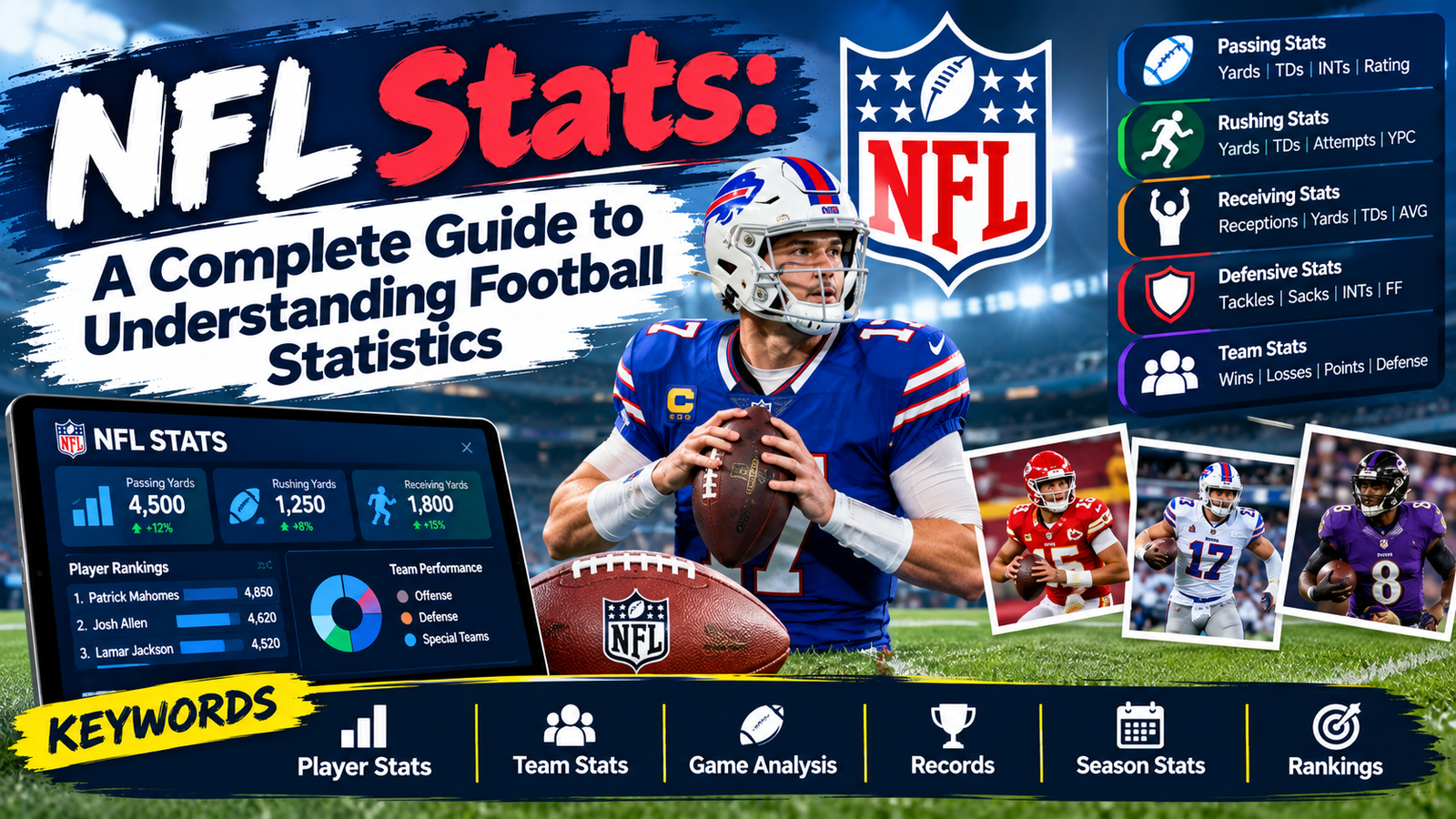
NFL Stats: A Complete Guide to Understanding Football Statistics
NFL Stats are an essential part of understanding professional American football. Whether you are a longtime fan, a fantasy football player, a sports analyst, or someone new to the game, statistics provide valuable information about players, teams, and individual performances. From passing yards and touchdowns to tackles, sacks, and interceptions, NFL statistics help explain what happens on the field and allow fans to compare performances across games and seasons.
What Are NFL Stats?
NFL stats are numerical records that measure different aspects of football performance. These statistics are collected during games and organized into categories for players and teams. Offensive statistics commonly include passing, rushing, receiving, and scoring numbers. Defensive statistics include tackles, sacks, interceptions, forced fumbles, and passes defended.
Team statistics can also show total yards, time of possession, turnovers, third-down efficiency, and points scored. By studying these numbers, fans can gain a clearer understanding of how a team performed beyond simply looking at the final score.
Important NFL Passing Stats
Passing statistics are among the most commonly followed NFL stats. Quarterbacks are primarily evaluated through numbers such as passing yards, passing touchdowns, completions, attempts, and interceptions.
Passing yards measure the total distance gained through completed forward passes. Completion percentage shows how often a quarterback completes an attempted pass. Passing touchdowns represent touchdowns scored through passing plays, while interceptions measure passes caught by the opposing defense.
Another important statistic is passer rating, which combines several passing measurements into one numerical figure. More advanced analysis may also use statistics such as yards per attempt, adjusted net yards per attempt, and expected points added.
NFL Rushing Stats
Rushing statistics measure how players perform when running with the football. Running backs, quarterbacks, and occasionally wide receivers can contribute rushing yards.
Key rushing stats include rushing attempts, rushing yards, rushing touchdowns, and yards per carry. Yards per carry are calculated by dividing total rushing yards by rushing attempts. This statistic can provide context about how efficiently a player gains yardage on running plays.
Long rushing plays are also recorded, helping fans identify players capable of producing big plays.
NFL Receiving Stats
Receiving statistics focus on players who catch passes. Wide receivers, tight ends, and running backs can all contribute to a team’s receiving production.
Important receiving statistics include targets, receptions, receiving yards, receiving touchdowns, and yards per reception. Targets represent the number of times a quarterback throws toward a particular receiver. Receptions show how many of those passes were successfully caught.
Yards after catch, often abbreviated as YAC, can also be useful because it shows how much additional yardage a receiver gains after securing the football.
NFL Defensive Stats
Defense is another major area of NFL statistics. Defensive players are measured through several categories that describe their ability to stop opposing offenses.
Tackles are among the most recognizable defensive statistics. Sacks record instances when a defensive player tackles the quarterback behind the line of scrimmage during a passing play. Interceptions occur when a defensive player catches a pass intended for an offensive player.
Other defensive statistics include forced fumbles, fumble recoveries, tackles for loss, quarterback hits, and passes defended. These numbers help provide a broader picture of defensive performance.
NFL Team Stats
Individual player numbers tell only part of the story. Team statistics are equally important when analyzing NFL games.
Common team statistics include total yards, rushing yards, passing yards, points scored, turnovers, penalties, third-down conversions, and time of possession. Turnover statistics are particularly important because losing possession can create scoring opportunities for the opposing team.
Teams may also be compared by offensive and defensive efficiency. Looking at several statistics together can provide more context than focusing on one number.
Advanced NFL Stats
Modern NFL analysis increasingly uses advanced statistics. These metrics attempt to provide more detailed information about performance and efficiency.
Examples include Expected Points Added (EPA), success rate, Defense-Adjusted Value Over Average (DVOA), and yards after contact. These statistics can help analysts evaluate plays in the context of down, distance, field position, and game situation.
Advanced statistics do not necessarily replace traditional numbers. Instead, they can complement basic statistics and provide additional information for deeper analysis.
NFL Stats for Fantasy Football
NFL statistics are also extremely important for fantasy football. Fantasy managers often monitor player production to make decisions about lineups, trades, and waiver-wire additions.
Quarterback passing yards and touchdowns, running back rushing and receiving production, and wide receiver targets and receptions are commonly tracked. Consistent statistical production can be especially valuable in fantasy leagues because managers typically need players who contribute regularly.
Understanding NFL stats can therefore help fantasy players evaluate performances rather than relying only on reputation or name recognition.
How to Compare NFL Players Using Stats
Comparing NFL players requires more than looking at one statistic. A quarterback with more passing yards may also have more attempts, while a receiver with more yards may have received significantly more targets.
It is useful to consider multiple statistics together. For example, a running back’s rushing yards can be examined alongside carries, yards per carry, touchdowns, and receiving production. Similarly, defensive players can be evaluated using tackles, sacks, pressures, interceptions, and other relevant metrics.
Context is also important because players have different roles, teammates, offensive systems, and numbers of games played.
Why NFL Stats Matter
NFL statistics give fans a structured way to understand football. They help document individual achievements, measure team performance, compare players, and analyze trends over time.
Stats can also make games more engaging because fans can follow specific milestones and performances. Historical statistics allow people to compare players from different eras, although such comparisons should account for changes in rules, offensive strategies, schedules, and playing styles.
Where to Find NFL Stats
NFL statistics are available through official league resources, team websites, sports media platforms, and other statistical databases. Fans can find box scores, player statistics, team statistics, standings, schedules, and historical information.
When checking statistics, it is useful to verify the season, game, and category because numbers can change throughout a season. Current-season statistics should also be distinguished from career or historical statistics.
Conclusion
NFL stats provide a detailed way to understand the game of professional football. Traditional statistics such as passing yards, rushing yards, receptions, touchdowns, tackles, sacks, and interceptions remain useful for following player and team performance. Advanced metrics add another layer by examining efficiency and game context.
Whether you are following your favorite team, researching players, participating in fantasy football, or simply trying to understand the game better, learning how to read NFL statistics can make football more informative and enjoyable. By looking at multiple statistics together and considering the context behind the numbers, fans can develop a deeper understanding of what happens on the field.


